

I coughed up a big gulp of salt water and desperately reached for my surfboard. Another missed wave. At this point I was so far from shore and too exhausted to keep trying. My best friend Jasmine stayed out in the water with our surfing instructor, while I paddled back to shore, out of breath and defeated. I’d heard Costa Rica was one of the best places for surfing, but so far, the ocean was getting the best of me.
I don’t shy away from the label “fitness fanatic.” I’ve been a group fitness instructor for a decade, run eight marathons, and built most of my adult identity around exercise. All of this is to say: I’m no stranger to moving my body.
So when I decided to pick up surfing last year, I assumed it would be humbling—but manageable. What I didn’t expect was how foreign I’d feel in my own skin. Standing on a surfboard for the first time forced me to move in ways that felt unfamiliar and awkward. Balance didn’t come easily. My timing felt off. And wiping out (repeatedly) required a level of humility I hadn’t practiced in a long time.
Surfing started as a side quest—an excuse to try something new and take a warm-weather trip with my best friend of 30 years. When we landed in Costa Rica, we settled into Lamangata Luxury Surf Resort, a cozy yet adventurous off-the-grid retreat made for people who actually want to learn how to surf—not just pose with a board. This was a legit surfing bootcamp.
Our days quickly became structured around early-morning paddles, technique drills, and more than a few belly-flop wipeouts. I noticed quickly that surfing requires a lot of technical skill and has a high learning curve, so while I’m an experienced athlete in many activities, this was a new sport, and I was back to being a beginner.
I love a physical challenge, but what surprised me most was how mentally challenged I felt. Learning how to read waves, pop up quickly, and stay calm while being tossed around by the ocean required intense focus. My brain felt lit up in a way I hadn’t experienced in years. And as I suspected, there’s science behind that.
“Starting anything new activates reward systems in the brain,” Hilary Cauthen, PsyD, CMPC, a clinical sport psychologist and certified mental performance consultant, tells SELF. “You get endorphin releases, dopamine hits, and increased synaptic growth. Learning a new skill rather than repeating a familiar one engages multiple areas of the brain at once—the motor cortex, the prefrontal cortex, and the hippocampus. There’s a lot of brain activity going on, and it feels exciting.”
It turns out that “newbie high” isn’t just emotional—it’s neurological. Learning new physical skills encourages neuroplasticity—the brain’s ability to form new neural connections. And when you’re learning something unfamiliar, your brain builds what Dr. Cauthen calls “new roadways,” strengthening communication between the parts of your brain that control movement, decision-making, memory, and emotional regulation.
“In learning new skills, we’re creating longer neural pathways between the prefrontal cortex and the amygdala,” Dr. Cauthen says. “That means better emotional regulation. Instead of jumping straight into fight-or-flight, the brain learns to pause, assess, and respond.”
In other words, struggling through a new sport doesn’t just make you more coordinated (eventually)—it can make you more resilient.
That resilience doesn’t come without discomfort. There were moments during the trip when frustration bubbled up quickly. I was used to being competent. Used to knowing how my body would respond. At times, surfing stripped that confidence away, wave by wave. But leaning into that discomfort became part of the reward.
“A lot of people avoid trying new things because they fear failure or criticism,” Dr. Cauthen explains. “But struggling through learning isn’t a weakness—it’s how we build frustration tolerance and emotional resilience. Repeating, failing, adjusting—that’s where the growth mindset becomes real.”
By the end of the week, I was far from being a pro surfer, but I had noticeably improved. And even better, I felt mentally lighter. I was energized and proud. The small wins started stacking up—a smoother pop-up, a longer ride on a wave—these successes gave me a huge sense of accomplishment. That dopamine reward loop, Dr. Cauthen says, is what keeps people coming back. “Going from novice to progress is incredibly reinforcing for motivation.”
If there’s one lesson I took home from Costa Rica, it’s this: Fitness doesn’t have to mean perfection. Sometimes, the healthiest thing you can do is start from zero.
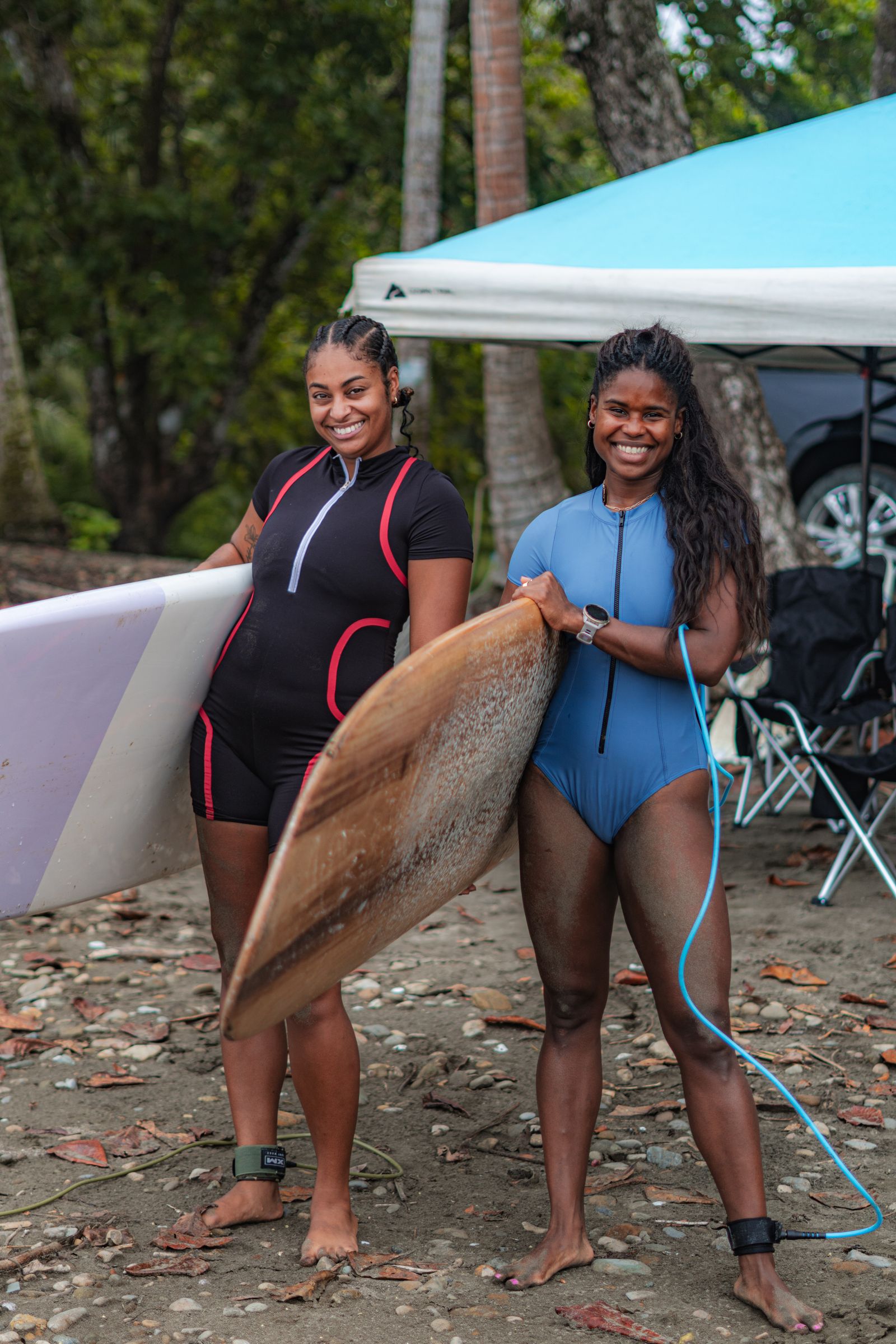
If you’re inspired to try something new (but intimidated), Dr. Cauthen suggests a few key strategies:
Give it a season.
“Learning takes time,” she says. “Commit to a season, around 12 weeks, to allow skill acquisition and habit formation. Don’t quit after two weeks.”
Balance novelty with familiarity.
Try your new sport a few times per week, but keep your regular exercises in your routine, like walking, running, or going to the gym. Variety helps your brain and body adapt, and according to new research, it boosts longevity too.
Expect frustration and normalize it.
The biggest lesson I’ve learned in my surfing journey is that discomfort isn’t a sign that I’m failing. It's actually a sign that my brain is growing. If everything we did felt easy all the time, we’d be doing ourselves a disservice.
Find social support.
Learning with someone else, especially another beginner, helps with the fear of failure and makes it more fun. Bonus points if you can laugh together when you fall flat on your face. “That’s going to help you stay committed if you have a partner that's also going through it with you,” Dr. Cauthen says.
As adults, we rarely give ourselves permission to be bad at things. But learning how to surf reminded me that being a beginner again isn’t a setback. It’s a stimulus that challenges my brain, strengthens my emotional resilience, and reconnects me with the joy of learning. And sometimes, that’s the most powerful workout of all.
Related:
- The Case for Ditching Hard Workouts and Playing Instead
- 7 Ways to Heal Your Relationship With Exercise and Movement
- 10 Ways to Build an Actually Sustainable Workout Routine You Love
Get more of SELF’s great fitness journalism delivered right to your inbox.
