This Simple Upper-Body Dumbbell Workout Will Build Strength in Your Arms, Back, and Chest

If you want to build real upper-body strength, a reliable dumbbell workout is a must. Bodyweight workouts can take you far, but adding resistance with extra weight is what helps strengthen your arms, back, and chest—and stay that way.
Fixed and adjustable dumbbells are a great choice for external load because they’re typically easier to find and less expensive than other types of free weights, like kettlebells and barbells. Adjustable weight options also give you the flexibility to change the amount of weight when you want, and progress without needing to buy new dumbbells. They're easy to master, even if you’re new to strength training, making them a solid choice for beginner strength exercises.
So, once you’ve committed to dumbbells, what’s the best way to strengthen your upper body? You’ll want a routine filled with compound moves that hit all the major muscles, including your lower and upper chest; upper, mid, and lower back, and the front, middle, and rear of your shoulders, certified personal trainer Francine Delgado-Lugo, CPT, movement and strength coach and cofounder of Form Fitness Brooklyn, tells SELF. For a really comprehensive workout, you’ll also want to include isolation exercises too. These give attention to some of the smaller muscles, like your biceps, triceps, and forearms, she says.
In this upper-body dumbbell workout created by Delgado-Lugo, you’ll target all of these areas. And you’ll focus primarily on two basic movement patterns to get it done: pushing and pulling.
With pushing exercises, you’ll work the front of your body, including your chest, shoulders and triceps. These are the main muscles that help with that pushing motion. Pulling exercises target your lats, lower traps, rhomboids, and biceps. No major muscle group in the upper body will be left untouched with this routine. The key to making this a balanced and effective workout is to use a moderately heavy dumbbell that feels challenging for the number of suggested reps, says Delgado-Lugo.
“You’ll know you’ve gone heavy enough if you start to feel fatigued two to three reps before you complete your set,” she says. “If you can complete a full set comfortably or with minimal challenge, scale up.” By really challenging yourself, this makes for “a useful workout for anyone who is looking to build strength or add muscle,” Delgado-Lugo adds.
Another bonus: The upper-body exercises Delgado-Lugo chose are simple to execute—no moves with a lot of steps or confusing choreography here—and serve as the foundation for others you may want to try down the line too. For instance, once you’ve got the dumbbell chest press down, you can think about a barbell bench press. After mastering a bent-over row, you can try a chest-supported variation. Of course, you don’t have to progress from these dumbbell exercises (but of course we encourage it). One of the great things about this dumbbell workout is that you can keep doing it over and over again on upper-body days—simply add heavier weights as you go to continue seeing those gains.
Ready to get started? Do a quick upper-body warm-up to get your chest, shoulders, back, and arms loose, grab your dumbbells, and get ready to build some upper-body strength!
The Workout
What you need: Two sets of dumbbells—one heavier and one lighter—that feel medium-to-hard for your moves (check out our roundup of the best starter weights). You’ll use the heavier set for the exercises that target your bigger muscle groups–like the chest press, row, and press—and the lighter weights for moves that hit your smaller muscle groups—the skull crusher, biceps curl, lateral raise, and bent-over fly.)
Exercises
- Chest Press
- Skull Crusher
- Bent-Over Row
- Arnold Press
- Bent-Over Fly
- Alternating Biceps Curl
- Lateral to Front Raise
Directions
- Do 8-12 reps of each exercise.
- Try to move from one exercise to the next without resting. Take breaks if you feel like you can’t catch your breath or your form is slipping.
- After you’ve completed all seven exercises, rest for one to two minutes, then repeat the circuit. Complete three or four rounds total.
 Katie Thompson
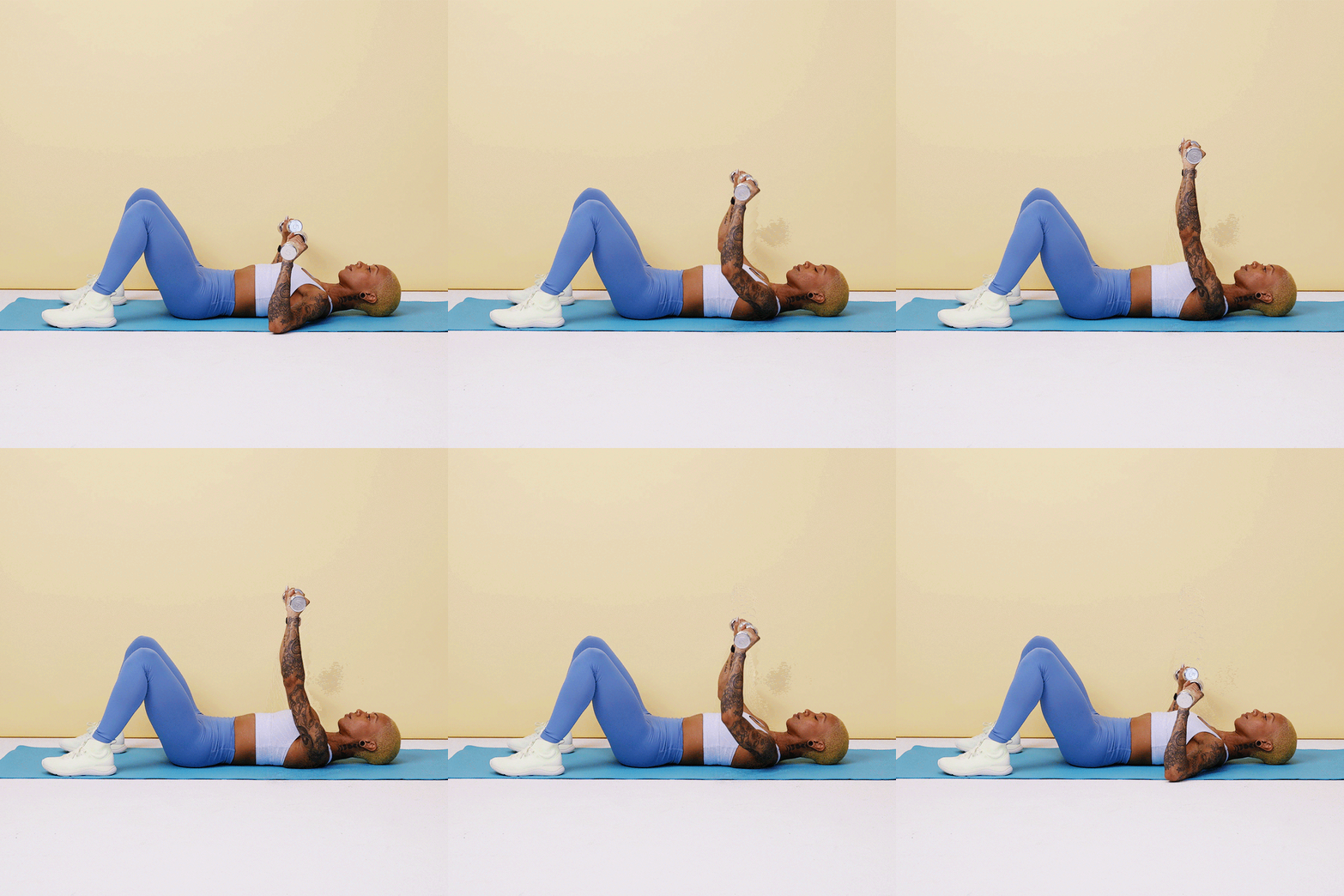
Chest Press
- Lie face up with your knees bent and feet flat on the floor. Hold a weight in each hand with your palms facing your legs and your elbows on the floor bent so that the weights are in the air. This is the starting position.
- Press the weights toward the ceiling, straightening your elbows completely and keeping your palms facing your legs. Pause here for a second.
- Slowly bend your elbows and lower them back down to the floor and out so that they are perpendicular to your torso. This is one rep.
- Do 8-12 reps.
The chest press is a great upper-body burner that targets your pecs (chest muscles), triceps (back of your upper arms), mid traps, rhomboids, and a bit of the lats (all in the upper back), Delgado-Lugo says.
 Katie Thompson
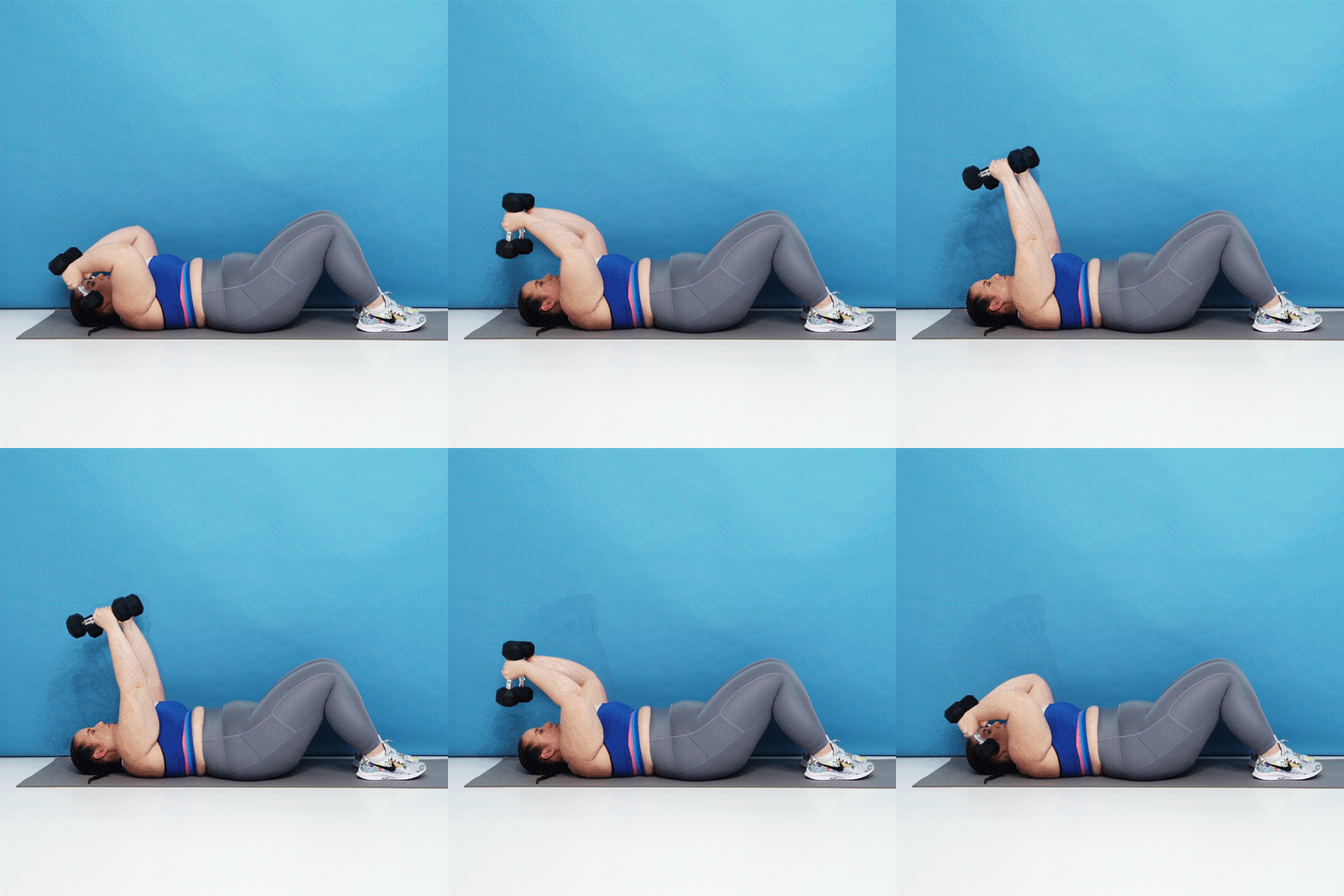
Skull Crusher
- Lie faceup with your knees bent and feet flat on the floor. Hold a dumbbell in each hand and extend your arms straight up toward the ceiling at chest level. This is the starting position.
- Slowly bend your elbows to lower both weights toward your head. Keep your elbows in place and simply bend them; don't move your shoulders or upper arms. Try to lower your dumbbells so they are on either side of your head, elbows bent close to your torso (not flared out to the sides).
- Lift your arms back to the starting position. This is one rep.
- Do 8-12 reps.
The skull crusher majorly isolates your triceps, which engage every time you straighten your elbow (like when doing a triceps extension or kickback). This muscle helps assist bigger “pushing” exercises, like a chest press or overhead press.


 Katie Thompson
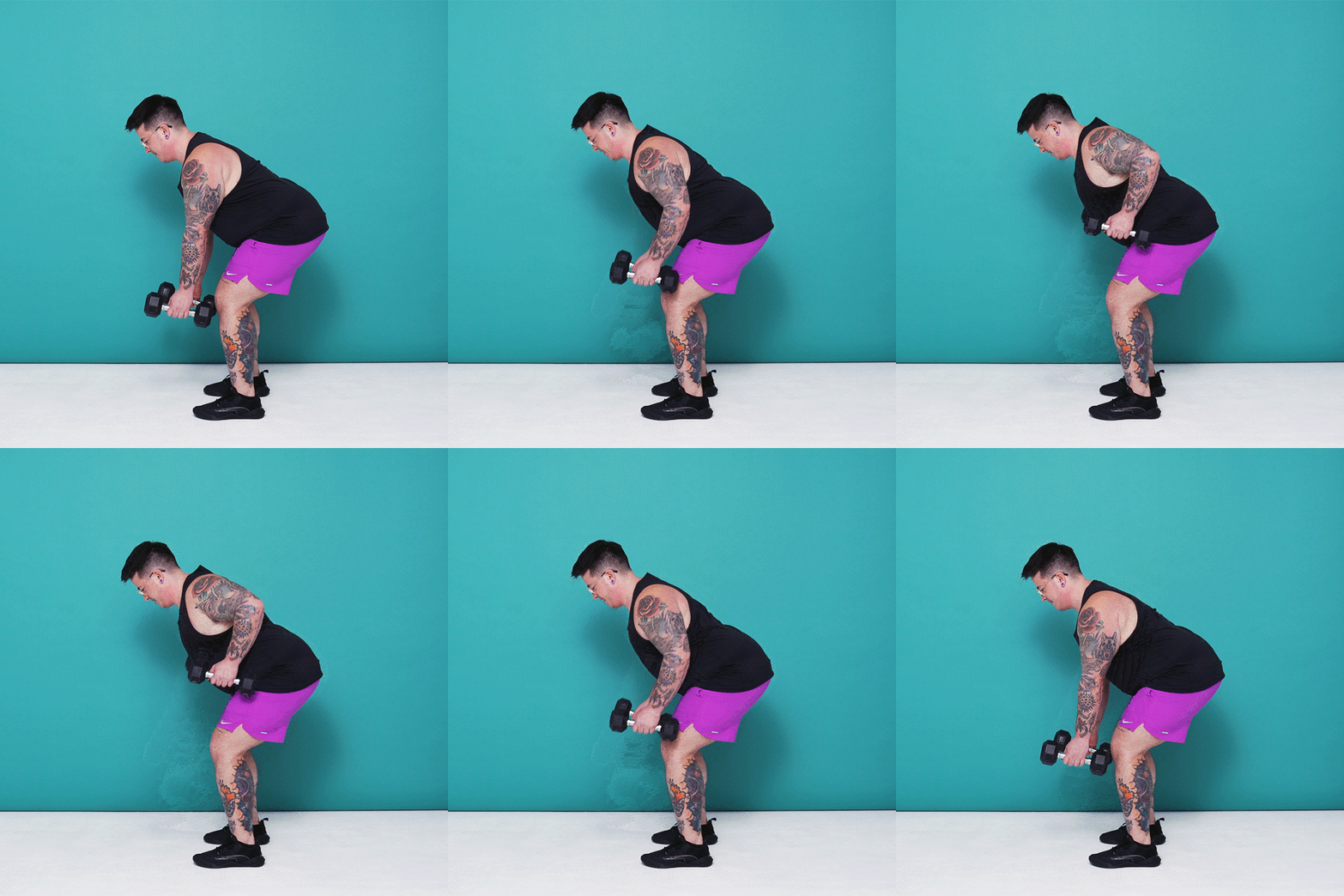
Bent-Over Row
- Stand with your feet hip-width apart, holding a weight in each hand with your arms at your sides.
- With your core engaged, hinge forward at the hips, push your butt back, and bend your knees slightly, so that your back is no lower than parallel to the floor. (Depending on your hamstring flexibility, you may not be able to bend so far over.) Gaze at the ground a few inches in front of your feet to keep your neck in a comfortable position.
- Do a row by pulling the weights up toward your chest, keeping your elbows hugged close to your body, and squeezing your shoulder blades for two seconds at the top of the movement. Your elbows should go past your back as you bring the weight toward your chest
- Slowly lower the weights by extending your arms toward the floor. This is one rep.
- Do 8-12 reps.
Your rhomboids (in the upper back) and your lats, which cover most of the mid and lower back, get some love in the bent-over row. “Strong backs help mitigate potential back pain or injury,” Delgado-Lugo says. “The bent-over position is great for core strengthening, too.”
 Katie Thompson
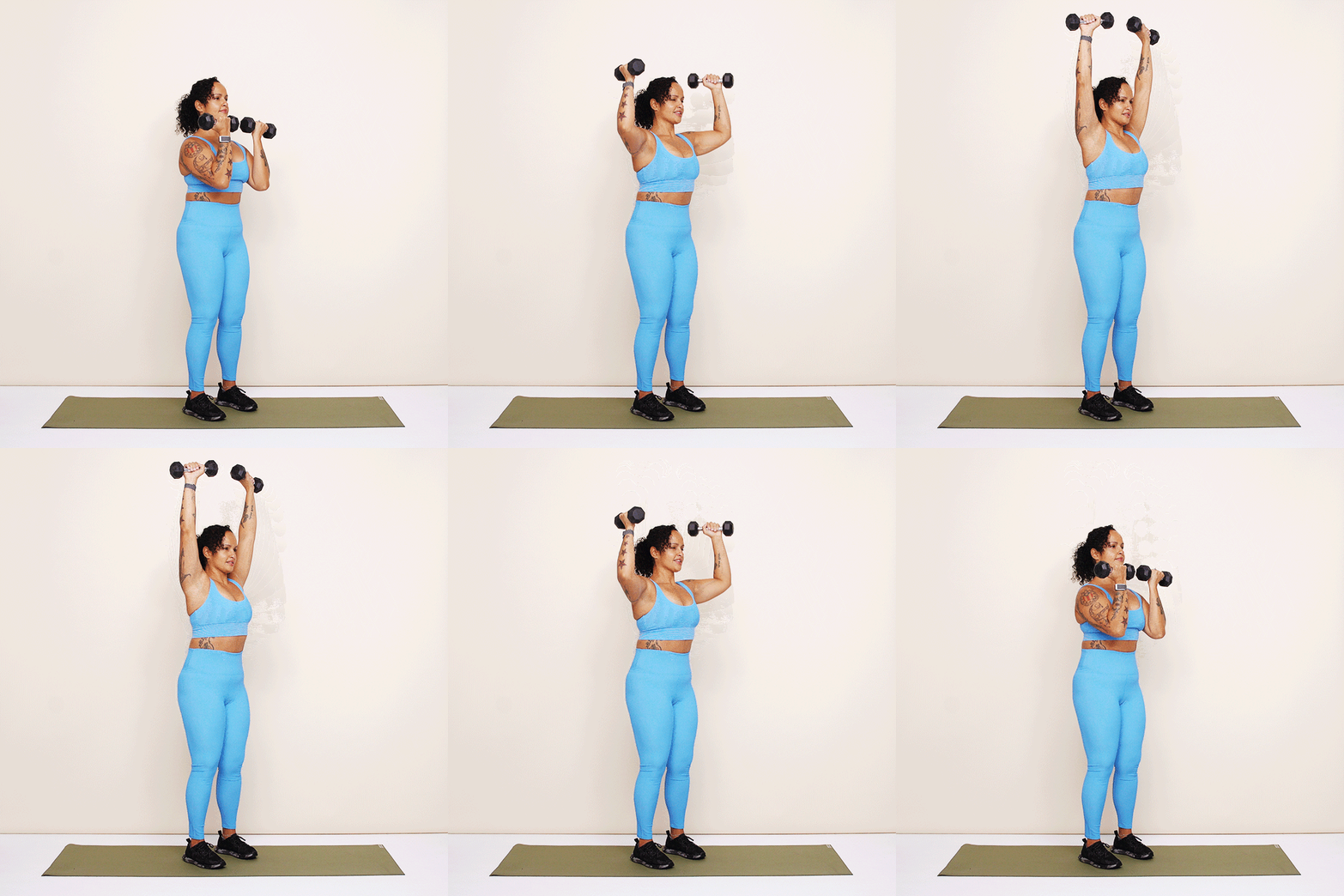
Arnold Press
- Stand with your feet shoulder-width apart. Hold a dumbbell in each hand above your collarbone, palms facing in, and elbows bent.
- Open up your arms so the dumbbells are above your shoulders, palms facing forward.
- Press the dumbbells overhead, extending your arms straight above your head.
- Reverse the sequence to come back down. This is one rep.
- Do 8-12 reps.
Slightly more complex than a traditional shoulder press, the Arnold press moves the deltoids, or the shoulder muscles, through a larger range of motion. This gives them more of a stability challenge and better engages all three heads or parts of the muscle. It also works your upper chest, biceps, and mid to upper traps, Delgado-Lugo says.


 Katie Thompson
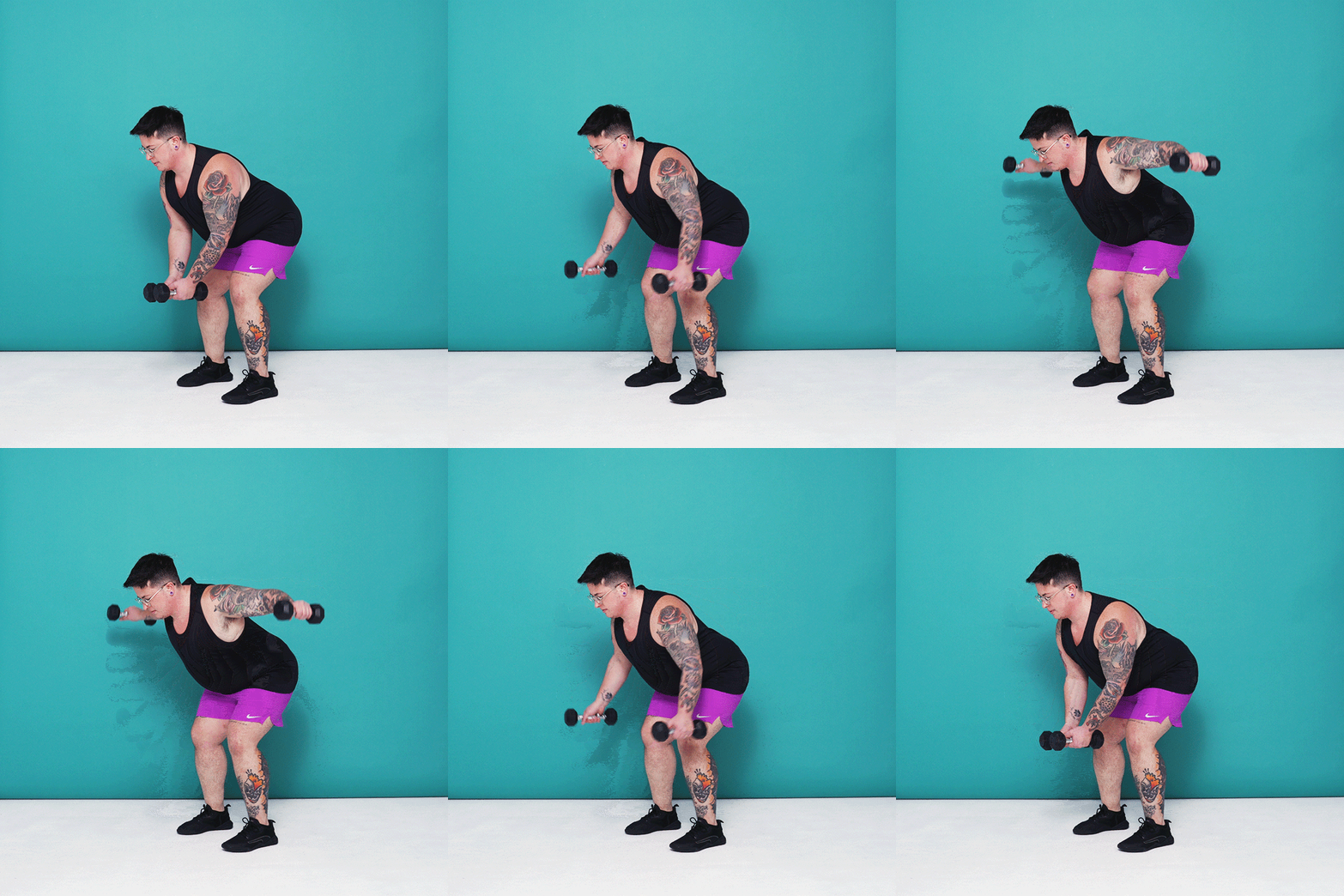
Reverse Fly
- Stand with your feet about hip-width apart as pictured, or sit up tall with feet pressed firmly into the ground. Hold a light dumbbell in each hand with your arms resting along the sides of your legs, palms facing in.
- Bend your knees slightly. Hinge over at your hips, making sure to keep your back straight.
- With a slight bend in your elbows, slowly lift the weights up and out to the sides until they’re in line with your shoulders.
- Lower them back down with control. This is one rep.
- Do 8-12 reps.
This move targets your rear delts and mid back, making it great for promoting good posture, Delgado-Lugo says.
 Katie Thompson
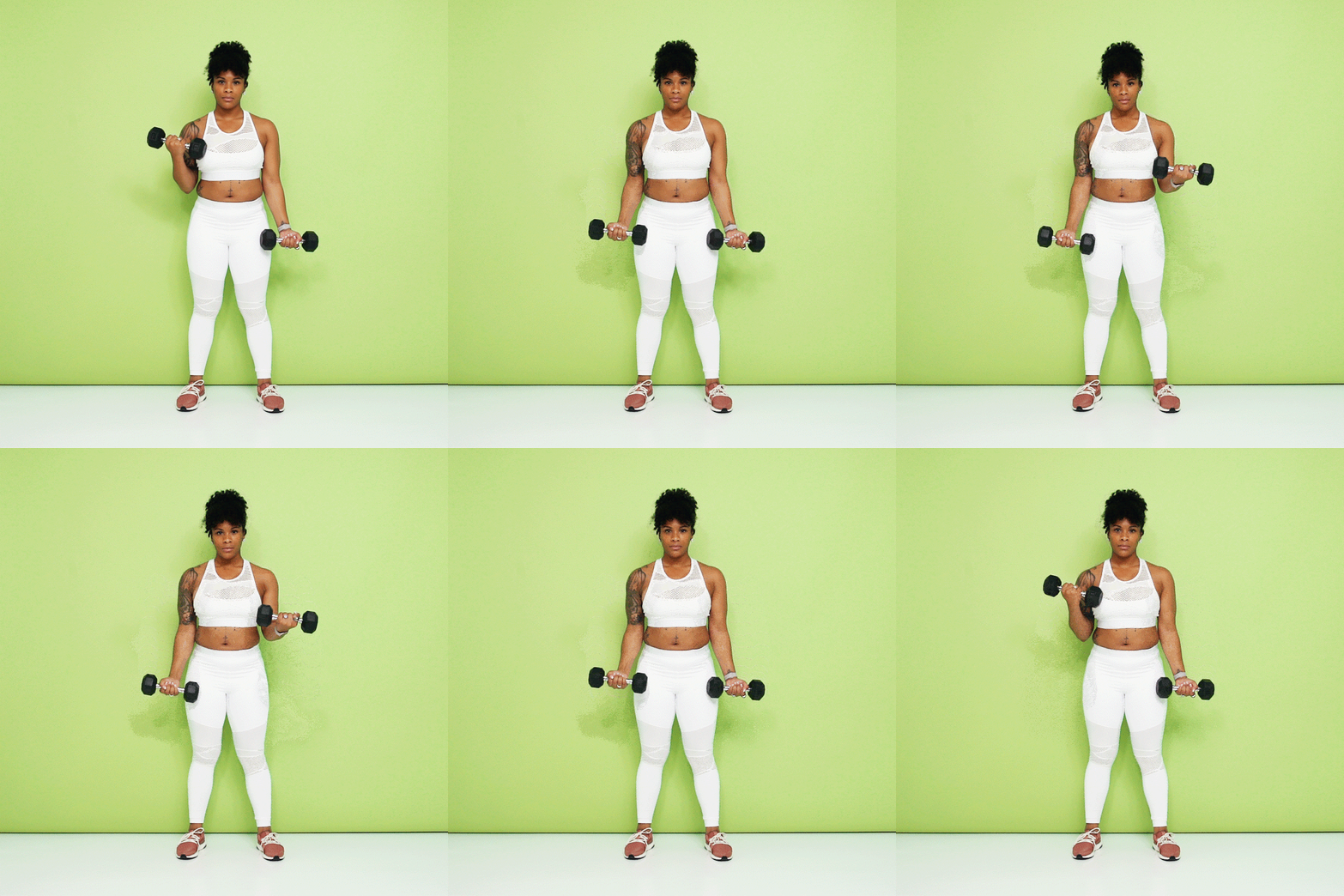
Alternating Biceps Curl
- Stand with your feet hip-width apart, holding a dumbbell in each hand with your arms in front of your body, palms facing forward. This is the starting position.
- Slowly curl your right hand up toward your shoulder, squeezing your biceps. Keep your elbow tight to the side of your body.
- Slowly lower your weight to the starting position. Repeat with your left arm. This is one rep.
- Continue alternating for 8-12 reps.
“Biceps are essential for pulling and carrying,” Delgado-Lugo says, and this move really hones in on them. Curling one arm at a time makes it easier to focus on form and move slowly and intentionally through the exercise.


 Katie Thompson
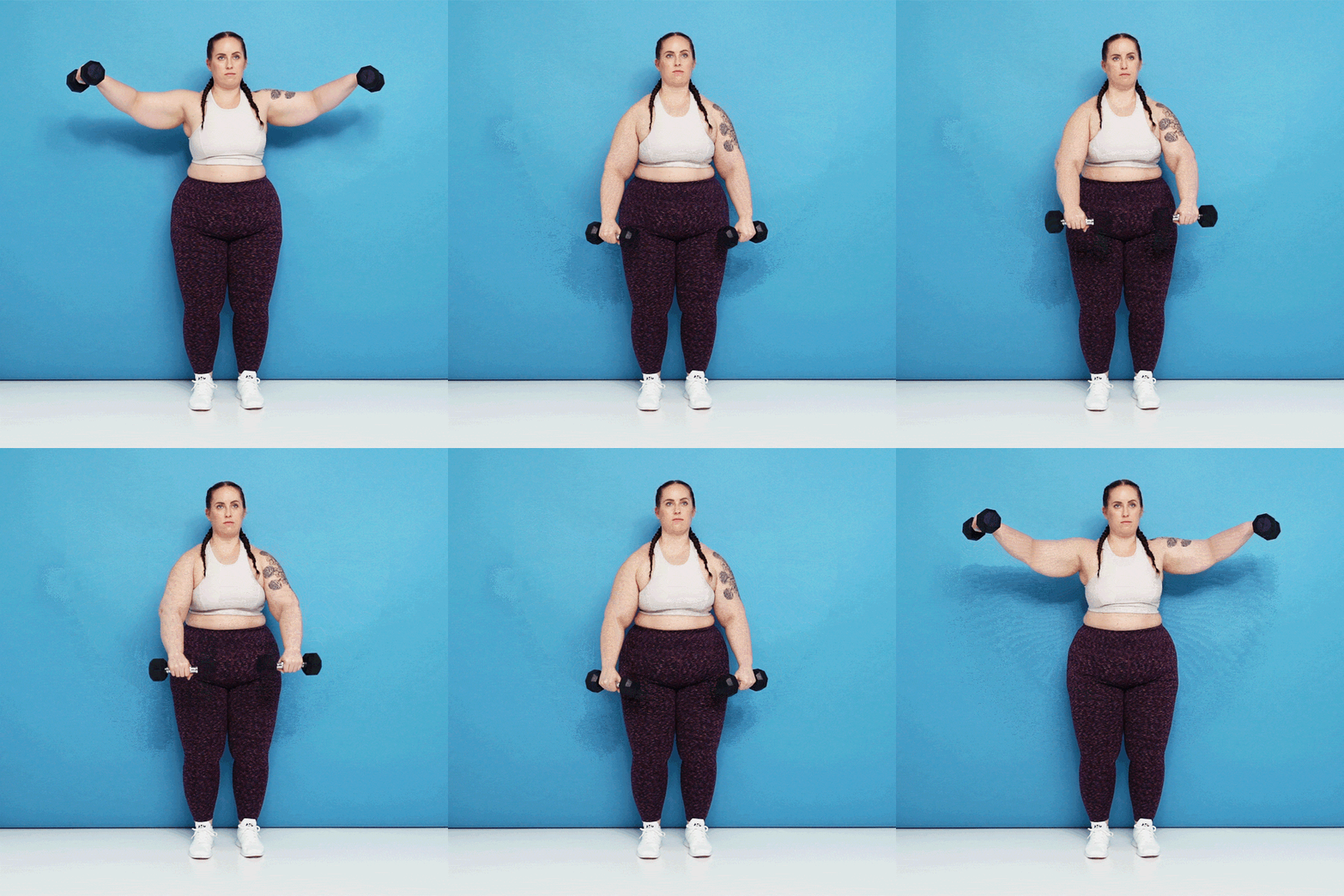
Alternating Front to Lateral Raise
- Stand with your feet about hip-width apart. Hold a weight in each hand with your arms resting along the front of your legs, palms facing in. This is the starting position.
- With a slight bend in your elbows, slowly lift your arms straight up in front of your body until they are in line with your shoulders. Then, slowly lower them back down to the starting position.
- Next, keeping that same bend in your elbows, raise your arms out to the sides until they are in line with your shoulders. Slowly lower them back down. This is one rep.
- Continue, alternating between forward and lateral raises, for 8-12 reps.
By working your shoulders in both of these directions, you’re strengthening your rotator cuff, the group of muscles and tendons that keep the shoulder joint stable. “We are prone to injury here, so this type of strength work helps to prevent it in the future,” Delgado-Lugo says.
Related:
- A Shoulder and Triceps Workout That Will Smoke Your Upper Body
- A Full-Body Dumbbell Workout to Hit Every Muscle You’ve Got
- This Back and Arm Workout Can Help Improve Your Posture
Get more of SELF’s great service journalism delivered right to your inbox.